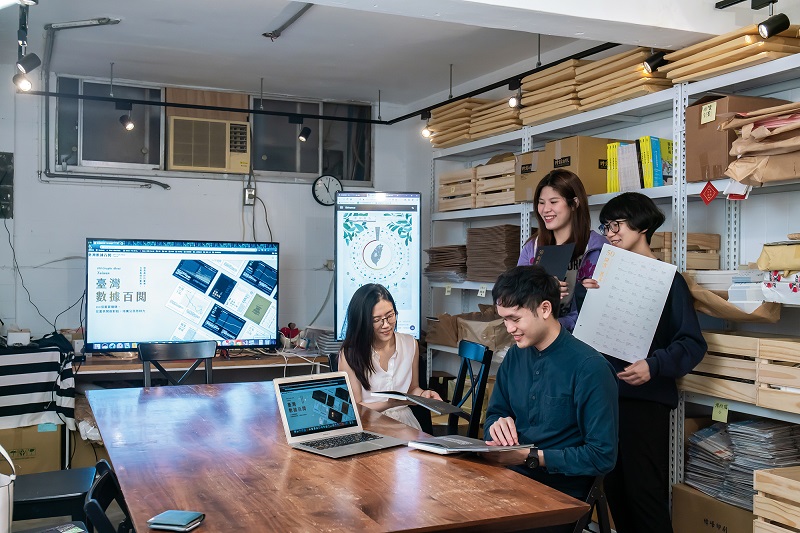
“Fooding Taitung” is on a mission to reveal Taitung as a gastronomic powerhouse. Operated by AGUA Design, the project launched in 2019 with the support of the Taitung County Government and the Taitung Design Center.





“Fooding Taitung” is on a mission to reveal Taitung as a gastronomic powerhouse. Operated by AGUA Design, the project launched in 2019 with the support of the Taitung County Government and the Taitung Design Center.

They don’t boast splendid furnishings, but they do offer freshly prepared ingredients. Don’t expect super-powerful air conditioning there, but be prepared for a sweet and invigorating coolness. Come and visit the old shaved ice shops of Madou and Qishan. Enjoy a bowl of ice and experience authentic vintage flavors and downhome hospitality. What better thing to do on a hot summer’s day?

Thanks to Taiwan’s outstanding information and communications technology and its prowess in artificial intelligence, the island’s commercial unmanned aerial vehicle (UAV) industry has become a bright new star, with applications in the fields of disease prevention, disaster relief, and agriculture. In particular, UAVs—a.k.a. drones—are creating a new “flightpath” for smart agriculture in Southeast Asia.

Sister Maryta Laumann came to Taiwan as a missionary from Germany when she was 28 years old. Now known as the “mother of textiles and clothing” on the island, she has dedicated more than half a century to scholarship at Fu Jen Catholic University. There she founded both the Department of Textiles and Clothing, the first of its kind in Taiwan, and the Chinese Textiles and Clothing Culture Center, which collects, exhibits and promotes traditional garments.

One of the debates swirling within the philosophical circles of a thousand years ago was whether a person could know if a fish was happy. Now, scientific research is offering a fish’s-eye view of the question.

Taiwanese citizens are fortunate because our constitution guarantees many civil liberties, including universal suffrage, freedom of speech and thought, the right to life, and the right to education, among others. Put into practice, this not only means that we are allowed to vote in elections, but the various rights which we enjoy also require that we—as responsible citizens—should proactively engage with public issues, reject trash talk and empty words, and take the initiative to act.
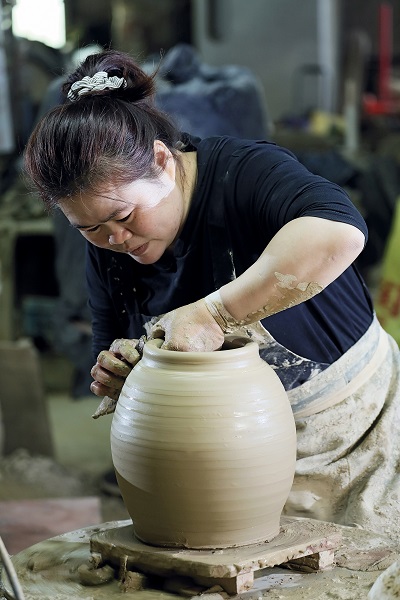
Tjung Seha originally hails from a Hakka village in Kalimantan, Indonesia. After marrying and moving to Taiwan, she began learning pottery from her father-in-law, master potter Hsieh Fa-chang. Through observation and her keen mind, Tjung learned to shape large urns. Optimistic and hardworking by nature, she single-handedly revived her in-laws’ pottery workshop, bringing new life to a family business that had been on the verge of closure.

We are living in a “post-truth” era. In 2016, the Oxford English Dictionary named “post-truth” its word of the year, defining it as “relating to or denoting circumstances in which objective facts are less influential in shaping public opinion than appeals to emotion and personal belief.” In recent years, the words and ideas of leading figures in political or social movements have drawn more public attention than the social issues themselves.

Whether riding the refurbished tourist trains that launched at the end of last year, or passing through innovative stations in Eastern Taiwan that are fruits of the “Hualien-Taitung new train station movement,” travelers can see that change is afoot: The “railroad scenery” that people encounter as they commute, leave their hometowns, or go on vacation has been getting a fresh new look.

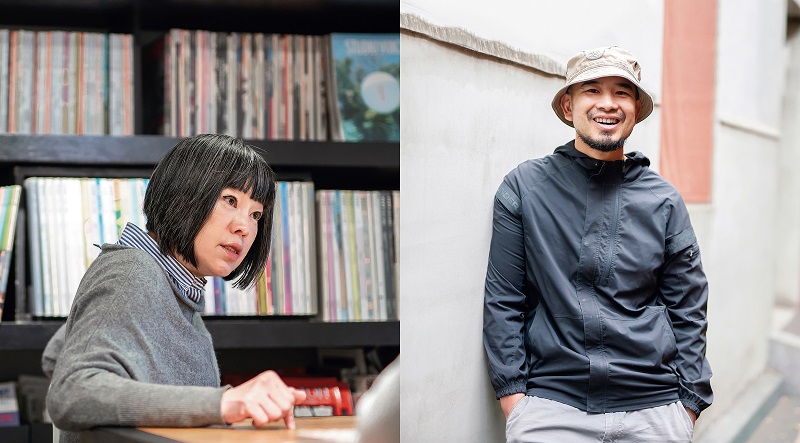
In an era of flourishing new media and “self-media” (or “we-media”), there are many chances and many moves, much information and many pitfalls. How do people operating in this field maintain their self-discipline against the temptations of click-through rates? In a bewilderingly varied media environment, how can consumers tell fact from fiction? In this issue, we invite two self-media founders—Fan Chi-fei and Alex Lin—to chat about media, their attitudes, and their objectives.